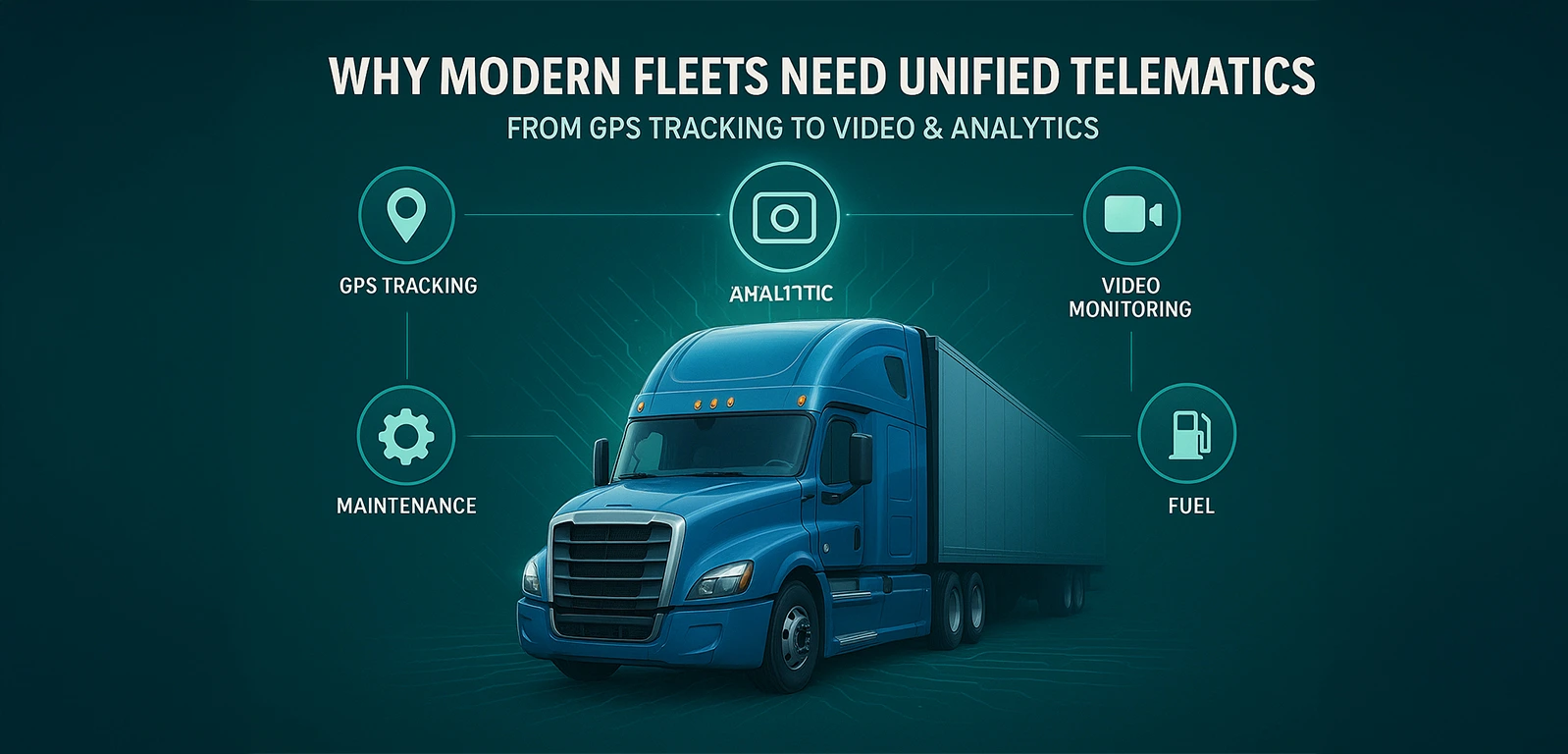
The modern logistics industry runs on pressure — deliver faster, spend smarter, and stay safe. Basic GPS tracking no longer cuts it. Today’s fleets need Unified Telematics — a single platform integrating GPS, video, AI, and analytics — the essential backbone for scalable, secure, and data-driven logistics operations.
Fleet management has evolved from simple GPS tracking to unified telematics powered by AI, IoT, and analytics. Enterprises now seek control, safety, and profitability — not just data. Disconnected tools create confusion; what fleets need is one intelligent ecosystem that integrates tracking, video, and analytics to empower smarter decisions.
The Evolution of Fleet Telematics: What’s Changed in the Last 5 Years
Just five years ago, fleet telematics primarily meant location tracking. Operators relied on GPS devices to see where vehicles were and to receive basic alerts about movement or stoppage. While useful, this model provided limited context. The most significant change is the shift from knowing where a truck is to knowing exactly what is happening inside and around the truck. Today, telematics has expanded into a 360° operational command center. The rise of IoT sensors, AI-enabled dashcams, cloud analytics, and edge computing has transformed how fleets are managed.
Key advancements include:
- AI-based driver behavior analytics (detecting distraction, fatigue, or unsafe habits).
- Smart fuel sensors for real-time consumption insights and theft detection.
- Video telematics combining live streaming and event-based recording.
- Data consolidation dashboards integrating GPS, fuel, temperature, and video analytics in one view.
The modern telematics ecosystem is now predictive, not reactive — enabling logistics leaders to act before inefficiencies turn into losses.
Key Pain Points for Enterprise Fleets
Enterprise logistics fleets, operating at scale, face specific pain points that simple GPS tracking cannot solve:
- Idle Time & Fuel Costs: Idling is often invisible without granular data. When managing hundreds of vehicles, 5 minutes of extra idling per truck per day can translate into lakhs of rupees in wasted fuel annually. Unified analytics can pinpoint exact causes (e.g., specific delivery locations with long wait times), leading to actionable process changes.
- Driver Safety & Insurance Liability: Drivers face growing pressure to deliver faster while managing fatigue, distractions, and unsafe roads. Without live monitoring or behavior analytics, fleet managers can’t ensure safety compliance or intervene during critical events. Accidents are the single largest unpredictable cost. Beyond the human toll, insurance premiums skyrocket with every at-fault incident. Video telematics provides irrefutable recorded proof to fight fraudulent claims and exonerate innocent drivers, directly reducing costs.
- Operational Inefficiency: Managing driver compliance, vehicle maintenance, and route adherence across a large fleet using multiple, disjointed software tools creates administrative chaos. Manually reconciling data between a GPS tracker, a dashcam interface, and an ERP system is a major overhead.
How a Unified Solution (Tracking + Video + Analytics) Beats Point Tools
Unified telematics is not just a convenience — it’s a strategic advantage. By combining GPS tracking, video telematics, and analytics, enterprises gain a complete picture of fleet health and driver performance. A single, integrated platform overcomes the friction of siloed systems:
- Contextual Visibility: When a harsh braking event occurs (GPS data), the system immediately links it to the corresponding video clip (video data) and driver ID (analytics data). This turns a simple data point into a coaching moment that promotes responsible driving.
- Operational Efficiency: Fleet managers access location, vehicle health, driver score, and video footage through one dashboard, speeding up claims resolution, maintenance scheduling, and daily management.
- Predictive Insights: Combining telematics data with AI helps forecast maintenance, detect anomalies, and prevent breakdowns.
- Cost Savings: Unified data reduces redundancies, cuts idle fuel costs, and ensures better asset utilization.
- Compliance and Reporting: Centralized data simplifies audit trails and regulatory adherence.
A unified fleet tracking, video, and analytics platform transforms telematics from passive monitoring into active optimization — turning every data point into actionable intelligence.
Architecture Considerations for the Modern Enterprise
One of the biggest limitations in traditional telematics systems is vendor lock-in — proprietary hardware and closed systems that restrict flexibility. When evaluating an enterprise fleet telematics solution, architecture is key to future-proofing your investment:
- Hardware-Agnostic Platforms: Choose a platform that supports multiple GPS devices, dashcams, and sensors without performance loss, reducing upfront costs and avoiding lock-in.
- Open APIs and Integrations: Ensure seamless connectivity with ERP, TMS, CRM, and accounting software so data flows freely and eliminates manual entry.
Use Case: How Roadcast Helped Reduce Idle Time by 18%
A large FMCG logistics enterprise partnered with Roadcast to address rising idle time and fuel inefficiency across its 500-vehicle network.
Challenges:
- High idle hours due to poor route planning.
- Manual trip tracking leading to delays.
- Lack of visibility into driver behavior.
Solution:
Roadcast deployed its hardware-agnostic telematics platform, integrating real-time tracking, video telematics, and analytics. The company gained access to live dashboards showing idle reports, route deviations, and driver behavior metrics.
Results:
- Idle time reduced by 18% within three months.
- Improved delivery punctuality and driver accountability.
- Achieved a measurable fuel efficiency gain of 12% across the fleet.
This transformation wasn’t driven by more data — but by connected data.
Next Step: How to Evaluate Vendors & What Roadmap to Ask For
When selecting a telematics partner, look beyond features and focus on platform adaptability. Use this quick checklist:
- Hardware Flexibility: Support for your existing devices.
- Data Unification: Seamless integration of GPS, video, and analytics.
- Custom Dashboards: Configurable reports aligned to your KPIs.
- Open API Ecosystem: Compatibility with ERP, CRM, and logistics software.
- Scalability: A platform that evolves with your business.
Conclusion
The future of fleet management lies in unification, not fragmentation. As logistics scale, success depends on integrating real-time tracking, video, and analytics. Platforms like Roadcast bridge safety, efficiency, and profitability — because it’s no longer about where your fleet is, but how safely and smartly it’s moving forward.